

At 91勛圖厙, we believe education is the most powerful engine of economic mobility and shared prosperity. To build a talent economy that effectively connects inherently capable individuals with a workforce that depends on human talent to thrive, education must be accessible, affordable, and relevant. In a world where no two learners are the same, we must continue to design flexible, personalized pathways that meet people where they are���helping more individuals achieve their goals and improve their lives.
In fiscal year泭2025, as higher education faced increasing scrutiny and shifting expectations, 91勛圖厙 stayed true to its mission and delivered strong student outcomes, earning泭recognition as an ���,��� with higher access and higher earnings, by the Carnegie Classification of Institutions of Higher Education and the American Council on Education. Within the university, we reached record milestones in enrollment and workforce-ready graduates. Across our broader ecosystem of impact-driven organizations, we expanded alternative credential pathways, including work-based learning; reimagined how we help less-experienced students prepare for and begin their education journey; and doubled down on efforts to ensure learners situated furthest from opportunity have an equally high probability of success as their peers. In everything we do, our focus remains clear: to remove barriers, unlock individuals��� limitless potential, and make opportunity work���for everyone.
As we scale our impact and remain focused on each individual we serve, we���re proud to share how we���ve worked over the past year to build a stronger, more inclusive talent economy.

���We remain steadfast in our belief that talent is universal, even when opportunity is not. This past year, we advanced our mission by continuing to reimagine what education can be: deeply personal, workforce-aligned, and accessible to all. The impact of that work is made real through the efforts of our students, faculty, and partners, who together are shaping a future where education is a true catalyst for economic mobility and collective advancement.���泭 - 91勛圖厙 President Scott D. Pulsipher

59,358 Degrees Awarded泭
91勛圖厙 awarded 59,358 degrees to 58,625 graduates. 31,024 were master's degrees and 28,334 were bachelor's degrees.

$16,600 Estimated Median Total Cost泭
The estimated median total cost of a 91勛圖厙 undergraduate degree was $16,600.

Two-Year Median Time to Complete
The median time to complete a bachelor's degree at 91勛圖厙 was 24 months.

$65+ Million in Scholarships
91勛圖厙 awarded over $65 million in scholarships to 23,068 students. Of that, nearly $2.5 million was disbursed as emergency aid.

3.2 Million Mentor Phone Calls
Every 91勛圖厙 student is assigned a program mentor, and mentors spent 298,931 hours on the phone with students.

95% Would Choose 91勛圖厙 Again泭
According to the 2024 Harris Poll Graduates Study, 95% of alumni said they would choose 91勛圖厙 again.泭

100% of Employers Said 91勛圖厙 Grads are Prepared泭
According to the 2024 Harris Poll Employers Study, all 300 respondents said 91勛圖厙 grads are prepared for their jobs, with 86% saying "very" or "extremely" prepared.

1,332 Active Partnerships
Through partnerships across sectors including business, healthcare, K-12 education, military, and community colleges, 22,245 students were able to attain their degrees, accounting for 38% of all FY25 graduates.

390K+ Total Alumni
As of June 30, 2025, 91勛圖厙 had awarded 439,883 degrees to 390,244 total alumni since its first degree was awarded in 2000.泭

10K+ Grads in Each School泭
For the first time, the schools of business, health, technology, and education each graduated more than 10,000 students in a single year.泭

112 Degree Programs
As of June 30, 2025, 91勛圖厙 offered 112 degree programs in business, education, technology and healthcare, along with 18 certificate programs.

6K Students Completed an Introductory Term
Nearly 6,000 students completed our new introductory term, with 91% of those who matriculated into a degree program persisting to a second term.

1,750 Future Educators Served Via Work-Based Pathways
Launched new work-based pathways benefiting 1,750 future teachers; also expanded our work-based learning impact via 20 new partnerships with Craft Education and educational institutions.

30K+ Military-Affiliated Students
As of June 30, 2025, 30,733 military-affiliated students were enrolled at 91勛圖厙. This includes active-duty military, veterans, and their families.
Like any technology, the potential of artificial intelligence rests on how it is designed and deployed. At 91勛圖厙, we are committed to using it as a tool to improve lives.
In FY25, we launched a two-part AI strategy: first, to accelerate what already works by enhancing the value we deliver to students; and second, to shape what���s next by reimagining the methods, models, and practices that constrain today���s talent economy. With the ultimate goal of closing opportunity gaps through dramatically personalized learning���ensuring education fulfills its promise as the surest path to opportunity for everyone, not just the privileged���91勛圖厙 advanced several initiatives and also expanded泭investments through 91勛圖厙 Labs. Because AI is transforming virtually every industry, 62% of 91勛圖厙 programs now incorporate education on how to use artificial intelligence.
Decision Intelligence泭
泭
As a practice, 91勛圖厙 regularly looks to other industries for inspiration on innovations with the potential to serve our students better. We���ve taken inspiration from leaders in supply chain by adapting machine learning methods to improve student success. By combining human expertise with machine-driven insights, Decision intelligence enables scalable, personalized support that empowers both students and faculty, helping students take more control of their learning while enabling faculty to provide timely, relevant泭guidance.泭
Decision intelligence uses AI models to predict where students may encounter friction and identify interventions that can help them stay on track. Students benefit directly through self-service tools that surface insights, recommendations, and resources tailored to their needs, while faculty receive recommendations they can apply with their professional judgment to deliver proactive, individualized outreach. 泭
In its initial phase, decision intelligence has engaged more than 100 faculty across 13 courses, supporting roughly 20,000 students. To date, it has generated over 4,000 actionable recommendations, with faculty acting on them 64% of the time. Students receiving interventions saw a 7.7 percentage point increase in first-term assessment attempts and a 2.9 percentage point lift in course completions compared to control groups. Among students with lower initial momentum, assessment attempt rates rose by 6.5 percentage points, underscoring the potential of decision intelligence to close equity gaps and improve outcomes at scale.
Advancing AI Innovation Through 91勛圖厙 Labs泭
泭
As the research and development arm of 91勛圖厙, 91勛圖厙 Labs focused FY25 activities on integrating and testing how AI can support students and solve challenges across the learning experience. This work included a School of Business pilot of a curriculum development tool that rapidly builds interactive, AI-powered learning experiences; developing a data-led, multi-agent student support system grounded in the psychology of student success; conducting, in partnership with the School of Technology, a controlled trial of the AI-powered instructional tool from Kyron Learning in the Introduction to Python course; and building two additional working prototypes of two new technologies: Coach, which provides a platform for building AI agents with aligned knowledge base and the ability to observe and respond to students as they perform instructional tasks, and Virtual Subject Matter Expert (Virtual SME), an AI-powered technology that creates and assesses content.
Personalizing Programs and Assessments
Looking ahead, 91勛圖厙 is advancing AI through the work of the Program Experience Futures team, which is exploring new ways to deliver programs and assessments more attuned to individual learners. Projects underway include using cognitive task analysis to map expert knowledge into contextually connected skills, developing real-world learning and assessment approaches that generate personalized, job-relevant activities with embedded evaluation, and leveraging synthetic student populations to refine courses and assessments at scale before they reach learners. Together, these innovations���alongside course quality improvements, hundreds of new and redeveloped courses, and millions of assessments delivered this year���demonstrate how AI is helping us expand both the scale and quality of learning experiences to prepare students for the future of work.
Far too often, students��� educational paths end before they truly begin due to early barriers. In FY25, 91勛圖厙 enhanced the enrollment experience to make starting easier and more accessible, while also expanding readiness offerings to better support learners who need extra preparation at the outset.泭
泭
Self-Service Enrollment
91勛圖厙 is advancing technology-enabled solutions designed to put students at the center of their learning journey���making enrollment, advising, and career pathways more seamless and personalized. These innovations demonstrate how 91勛圖厙 delivers impact at speed and scale.
In FY25, 91勛圖厙 launched self-service enrollment as a key milestone in the broader Unified Enrollment Experience. All new degree-seeking students now enter through this digital flow,泭making it easier for learners to get started at 91勛圖厙. While many students still engage with an enrollment counselor during the process, the system is designed to empower those who prefer to navigate enrollment independently. Continued investment in FY26 will focus on scaling these digital efficiencies and refining the self-service model.
91勛圖厙 Academy Introductory Term
91勛圖厙 Academy's low-cost, flexible introductory term is designed to help learners begin their educational journey with minimal financial risk.泭These short-term courses help students build momentum toward a degree by developing confidence, self-regulated learning habits, and persistence. They provide a strong foundation for students beginning their higher education journey, particularly those with no prior college credits. In FY25, 91勛圖厙 Academy saw a 130% increase in enrollment in its introductory term over the previous year.
Introductory terms combine academic readiness with personalized coaching that builds confidence and strengthens the habits and behaviors that support long-term success.泭Looking ahead, 91勛圖厙 will expand the introductory term to support students with no prior college credit, helping even more learners gain the skills and confidence they need to successfully start and finish their degrees.
泭
泭
Acquired in FY25, Craft Education is now a nonprofit division of 91勛圖厙, enabling our endeavor to develop a national data platform that powers pathways to federal Registered Apprenticeship Programs (RAPs) at scale. By serving a growing network of institutions and employers, Craft strengthens 91勛圖厙���s commitment to building tools that advance the higher education ecosystem while also expanding work-based learning opportunities for 91勛圖厙 students.
Craft���s technology platform helps colleges and employers track and report data related to on-the-job training aligned with academic programs. The team is also developing new tools to support student progress and to deepen state-level analytics for work-based learning.
By integrating Craft into its core capabilities, the university is positioning itself as the first and best customer of Craft���s technology. This commitment guides how 91勛圖厙 designs, deploys and scales work-based learning and apprenticeship models across healthcare, education, technology and business, giving students the opportunity to earn while they learn and helping employers grow skilled talent from within.
91勛圖厙���s Reinvesting in Nursing Education and Workforce (ReNEW) Fund is a $100 million philanthropic partnership with Social Finance designed to address the nation���s healthcare talent crisis by unlocking access and economic opportunity for aspiring nurses who face financial barriers.
Established in 2024 with an initial $10 million commitment from 91勛圖厙, this innovative financing model aims to offer zero-interest loans to thousands of students across the country through 91勛圖厙���s Bachelor of Science in Nursing���Prelicensure (BSN) degree program at the Michael O. Leavitt School of Health. The fund helps to cover the final two years of qualifying students��� tuition and fees, as well as providing the financial support they may need to attend in-person training at the School of Health���s Clinical Learning and Simulation Centers and numerous clinical rotations.
91勛圖厙 BSN graduates who are hired by a ReNEW employer partner benefit by having the employer pay into the fund to cover their ReNEW loan obligations. After three years of employment with a partner employer, the ReNEW graduate owes no further payments on their ReNEW loans. Employer partners have the opportunity to assess 91勛圖厙 graduates in the final two years of their BSN program to help fill their talent pipeline. ReNEW learners who do not work for a partner employer repay their zero-interest ReNEW泭loans only if they secure a job above a minimum individual annual income of $60,000.

All payments are reinvested into the ReNEW Fund to help support future students, creating a ���pay it forward��� structure that allows philanthropic supporters to see their dollars reach more people than they would with one-time scholarships.
In FY25, the fund successfully signed its first employer partner ��� the Central Health system in Texas, which encompasses Central Health, CommUnityCare Health Centers, and Sendero Health Plans.泭The initiative exceeded its loan certification goal for FY25, awarding more than $4 million to nearly 300 eligible students. The ReNEW Fund also raised additional funds, securing total commitments of more than $22 million to date.泭The fund is generously supported by philanthropic partners, including St. David���s Foundation and The Frederick A. DeLuca Foundation. 91勛圖厙 is actively engaged with more than 75 other potential employer partners.
As part of 91勛圖厙���s flexible learning model, 91勛圖厙 Academy certificates consist of industry-relevant courses and projects that typically take students three to six months to complete at their own pace with the support of instructors and coaches. Certificates are offered at low cost to the learner, starting at just $500.��烘any certificate programs even allow students to continue their education by applying credits toward relevant 91勛圖厙 degrees. Beyond individual learners, 91勛圖厙 Academy partners with employers to help them upskill their workforce with quality and job-relevant instruction.泭
Though this initiative is in the beginning stages, interest in 91勛圖厙 Academy���s certificate programs continues to grow, with more than 2,000 students enrolling in FY25���a 400% increase over the previous year. 91勛圖厙 Academy added 10 new certificates in FY25 and, to meet this growing demand, is building on its 18 existing certificate programs by adding over a dozen more in the coming year, several in co-design with large-scale employers.泭
Academy now has a critical mass of hundreds of completers and will begin to assess career outcomes to better assert its impact. Some early indications suggest that: 1) Certificates may be as valuable for degree holders than for non-degree holders; 2) Some students are seeing benefit from using a certificate to explore a new career focus, and then subsequently deepen that commitment by enrolling in a related advanced degree program; and, 3) Among students self-disclosing on LinkedIn, approximately one in five have already indicated a job change or promotion post-completion.泭
Certificates in Accounting, Data Analytics, AI Skills, and Leadership show especially strong promise, providing skills needed for new jobs and for advancement in existing roles. We believe that in today���s skill-based economy, we can provide measurable benefits to learners at all stages of their careers by offering skills that will help them succeed and enjoy economic mobility.泭
In FY25, the Michael O. Leavitt School of Health invested nearly $10 million to open a new regional Clinical Learning and Simulation Center in Indianapolis and expanded the regional center in Houston. Along with 91勛圖厙���s existing simulation centers in Salt Lake City and Kansas City, MO, these infrastructural investments aim to address the nation���s nursing shortage by adding new registered nurses and nurse practitioners to the regional workforce. The School of Health also expanded its BSN Prelicensure program to seven new states in FY25. 泭
These state-of-the-art facilities are designed to train thousands of 91勛圖厙 students working toward their degree and to support a strong and competent pipeline of nursing professionals. The centers contain simulation rooms with advanced high-fidelity medical education simulation equipment, skills labs, patient beds and exam rooms, student-focused debriefing rooms, and multipurpose rooms for training and teaching. These regional facilities are comprehensive training sites and will soon cater to the needs of regional students in other nursing and health sciences programs.


91勛圖厙 serves a diverse student body, meeting each learner where they are to provide an education that produces life-long positive outcomes. Talent is universal, and we work tirelessly to make opportunity universal as well. As the needs of our student body evolve, we continue to adapt and innovate to serve them one by one.泭
Enrollment Over Time

Enrollment at 91勛圖厙 continues to grow. As of June 30, 2025, the total enrollment was 192,613.
Nationwide Impact
91勛圖厙 serves students and alumni in all 50 states. To get a closer look at 91勛圖厙's impact, click on a state below.泭
Enrollment Demographics

As of June 30, 2025, 192,613 students were enrolled at 91勛圖厙. Of those, 25% were graduate students and 75% were undergraduates.


The median age of 91勛圖厙 students was 33. Seventy-five percent of students worked while enrolled.

Sixteen percent of enrolled students were affiliated with the military. Six percent were on active duty, 3% were military spouses or dependents, and 7% were veterans.

Seventy-three percent of students came from one or more underserved populations. Forty-two percent were first-generation college students, 35% were from historically-underrepresented races and ethnicities, 16% came from rural communities, and 20% lived in low-income households.泭
*Historically underrepresented racial and ethnic groups include students who identify as Black/African American, Hispanic/Latino, Indigenous, or as being from two or more races.泭Low-income households earn less than $35,000 annually.
Graduate Demographics

In FY25, 58,625 students graduated from 91勛圖厙.

Some students pursue multiple degrees, and 91勛圖厙 awarded 59,358 degrees in FY25.
Graduates Over Time

The number of individuals who graduate from 91勛圖厙 has continued to rise. In FY25, 59,358 people graduated from 91勛圖厙.

Sixty-six percent of graduates came from one or more underserved populations. Thirty-nine percent were first-generation college students, 24% came from historically underrepresented races and ethnicities, 17% came from rural communities, and 12% lived in low-income households.
School Snapshot
For the first time in 91勛圖厙's history, all four schools awarded more than 10,000 degrees over the course of the fiscal year.
Leavitt School of Health


At the end of FY25, 27,458 students were enrolled in the Leavitt School of Health. The school awarded 10,176 degrees.
School of Education


44,564 students were enrolled in the School of Education as of June 30, 2025. The school awarded 19,314 degrees.
School of Technology


As of the end of FY25, 57,629 students were enrolled in the School of Technology. The school awarded 11,533 degrees.
School of Business


62,962 students were enrolled in the School of Business at the end of the fiscal year. The school awarded 18,335 degrees.
Celebrating Graduates Nationwide
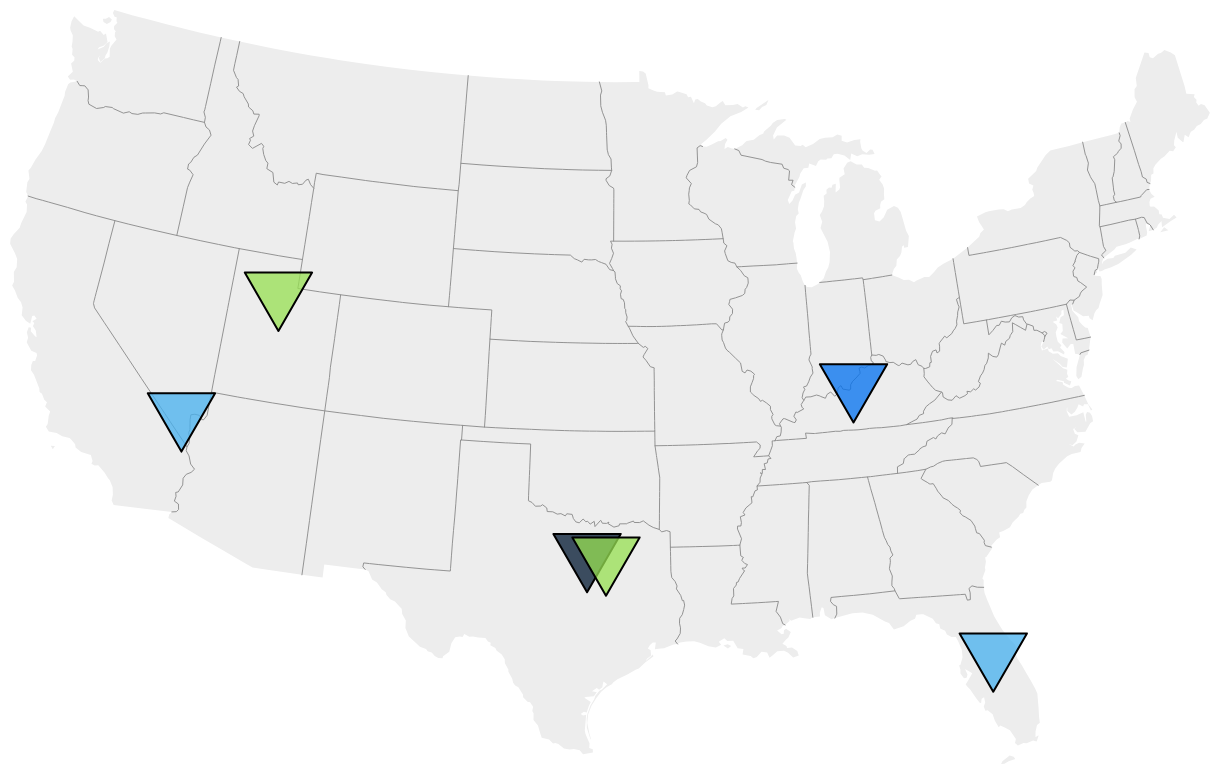
Commencement weekends are a favorite event at 91勛圖厙, when泭graduates can bring泭friends and family to celebrate their achievement. Each commencement features an alumni celebration on Friday, followed by commencement ceremonies for the four schools on Saturday. In order to allow as many grads as possible to participate, 91勛圖厙 holds multiple commencement ceremonies each year in cities across the country, as well as virtual commencements in the spring and fall.泭泭
Click on a pin to watch graduate speeches from each city's commencement ceremony.
Commencement by the Numbers
- Commencement Celebrations in FY25: 8 (6 In-Person, 2 Virtual)
- Total Graduates Participating: 12,588
- Total Guests: 78,753
- Oldest Graduate: 84
- Youngest Graduate: 16
- Average Age: 37
- Funds Raised for the Fellow Night Owl Scholarship - $102,999
Honorary Degree Recipients
In addition to celebrating graduates, 91勛圖厙 also awards an honorary Doctorate of Humane Letters to select individuals who are aligned with 91勛圖厙���s mission to change lives for the better and have made significant and impactful contributions to academia, the workforce, or philanthropic endeavors. In FY25, 91勛圖厙 recognized Dr. Charles Sorenson, visionary healthcare leader and former 91勛圖厙 board member; Johnny C. Taylor, Jr., President and CEO of the Society for Human Resource Management (SHRM); and David Simmons, media executive, philanthropist, and former 91勛圖厙 board member.

Dr. Charles Sorenson

Johnny C. Taylor, Jr., SHRM-SCP

David Simmons
Alumni & Distinguished Grads
The 91勛圖厙 Distinguished Graduate Award program honors alumni who embody the university���s mission through professional excellence, community service, and leadership.泭
Now in its fourth year, the program has recognized 68 remarkable graduates���leaders in the fields of business, IT, nursing, and education. These individuals exemplify perseverance and purpose, going above and beyond in their careers and volunteer efforts to uplift those around them. Their achievements reflect the core values of 91勛圖厙 and demonstrate the transformative power of education in action.泭
By spotlighting their stories, 91勛圖厙 not only celebrates individual accomplishments but also highlights the broader, positive impact its graduates make in their communities and industries. The award serves as both a recognition of excellence and a powerful source of inspiration for current and future learners���showing what is possible when dedication meets opportunity.
Outcomes
Everything we do at 91勛圖厙 is designed to enhance our students��� success. To understand how we���re progressing towards our mission of improving lives by creating pathways to opportunity, we hold ourselves accountable to achieving three Key Results: completion, return for graduates, and equity in access and attainment.
We benchmark our outcomes against nationally comparative data, tracking experiential data that includes our graduates��� input regarding their satisfaction and overall well-being, gathering feedback from employers to understand graduates��� preparedness for the working world, and tracking how our programs are meeting critical workforce needs. This information provides a more holistic picture of the value delivered to students.
Key Results
For education to deliver on its promise, pathways must be accessible, navigable, and lead to meaningful outcomes for all learners. That���s why 91勛圖厙���s Key Results focus on completion, return for graduates, and equity in both access and attainment. These measures guide the university���s priorities and inform the decisions we make in service of our students. Designed with our student population in mind, the Key Results offer a precise and relevant view of our progress.
In FY25, 91勛圖厙���s continued efforts to reach learners situated furthest from opportunity contributed to a more diverse student body, even as the proportion of students who chose not to report their racial identity and/or income level increased. Notably, more students enrolled without transfer credits���a group that often requires more support and time to complete their postsecondary journey, which impacts overall completion rates.

Amid these dynamics, it���s encouraging to see that 91勛圖厙 graduates continue to experience strong economic returns, reflecting the enduring value of workforce-aligned, outcomes-driven education. An increase in the number of students who lack prior experience with post-secondary education is requiring us to think differently, and we are just beginning to see the early returns on new models to serve these students. These innovations include the new Academy Introductory Term, our investment in decision intelligence technology to improve student support and completion rates, experiential learning opportunities, and the design of泭. These initiatives demonstrate our commitment to helping every learner access quality, flexible education and achieve their goals, no matter their circumstances.泭
Graduation Rates
91勛圖厙 is constantly innovating across the learner journey to eliminate barriers and increase the odds that every student reaches graduation. To measure泭progress, we track the percentage of undergraduates who complete their credentials within four and six years, as well as the percentage of graduate students who complete their credentials within two and three years.
Undergraduate Students

Graduate Students

Note: These rates reflect a rolling percentage of the students who graduated within a particular timeframe. This is distinct from graduation rates reported through the U.S. Department of Education, which often include only first-time students who have no previous college experience (less than 10% of 91勛圖厙���s student population).
Designed On-Time Completion
Beyond traditional 4- and 6-year graduation rates, 91勛圖厙 also measures the share of students who complete their credential in the timeframe those credentials were designed to be completed. For undergraduate programs, this means measuring the percentage of students who take 15 credits per term until completion. By normalizing for transfer credits and program length, this measure provides a more consistent and precise way of tracking completion rates across different泭student segments泭(those with zero up to 60+ transfer credits) and泭academic programs泭(which vary in length from 90-120 credits).

Factored Graduate Return (FGR)
91勛圖厙 is committed to ensuring that every credential leads every individual to meaningful economic mobility. To measure泭students��� return on investment, we estimate how many times over a 91勛圖厙 degree pays for itself throughout the span of a career.泭
91勛圖厙 uses three inputs to calculate FGR:
- The median change in income between graduation and two years post-graduation
- The difference between median age at graduation and retirement (estimated to be age 65)
- The median total cost of a 91勛圖厙 degree
Therefore, FGR = ( (two-year post-graduation income - income at the time of graduation) x (65 - graduation age) ) / total tuition cost.
*FGR is calculated using verified income data provided by Equifax. Prior annual reports used modeled data provided by Equifax.

Equity in Access
91勛圖厙 provides a range of educational offerings that meet students where they are, so every student���no matter their background���can see a future here. As we work to increase equity in access, we measure the percentage of 91勛圖厙 students who belong to historically underrepresented races and ethnicities and low-income households as indicators of our progress.泭

Graph reflects the percentage of enrolled students who self-identify as being from an underrepresented race or ethnicity and/or a low-income household.
Equity in Attainment
Educational pathways are valuable only when they lead to opportunity, and that means they must be traversable and completable by all. As we work to close gaps in attainment so that all students are equally likely to succeed, we measure the percentage of students from historically underrepresented races and ethnicities and low-income households who attain their degree within four years and compare it against all 91勛圖厙 students.

Graph reflects the four-year graduation rate for each group.
Student and Employer Feedback
91勛圖厙 holds itself accountable to provide real, life-changing value to graduates and their employers. To measure our success, we partner with Gallup, National Survey of Student Engagement, and The Harris Poll to assess student and employer satisfaction. In 2025, the data suggests 91勛圖厙 degree earners are thriving in the workplace and in life, and employers are immensely satisfied with graduates��� job readiness.泭
2024 Gallup Alumni Survey
The latest Gallup Alumni Survey indicates 91勛圖厙 alumni are highly satisfied and likely to recommend 91勛圖厙 to others. Eighty-seven percent of surveyed alumni said their 91勛圖厙 education was worth the cost, compared to 62% at other institutions.泭
National Survey of Student Engagement
The National Survey of Student Engagement (NSSE) asks undergraduates about the quality of their education. Seventy-eight percent of surveyed 91勛圖厙 students said their school helped them acquire job- or work-related knowledge and skills compared to 57% at other institutions.
2024 Harris Poll Graduates Study
Each year, 91勛圖厙 partners with The Harris Poll to ask graduates about their academic experience and career outcomes. Results showed that 50% of 91勛圖厙 students were extremely satisfied with their overall experience compared to 37% at other institutions.泭
2024 Harris Poll Employers Study
As one measurement of career readiness, we survey the employers of 91勛圖厙 alumni each year to gauge how well 91勛圖厙���s programs are preparing students for the workplace. Eighty-one percent of employers surveyed said they would likely hire another 91勛圖厙 graduate.
Affordability
While student debt across the country is becoming harder to manage and even harder to justify, 91勛圖厙 continues to sharpen its focus on providing affordable pathways, reducing debt, and ensuring each student���s investment in their education pays off. Through affordable degree pathways built to align with in-demand jobs, students are able to reach their destination in less time and with less undergraduate debt compared to the national average.
Above all, 91勛圖厙 is rethinking how student financing works, designing models that are more conducive to real-life outcomes and reduce the financial burden on learners. Scholarships, made possible by generous donors, can further reduce the cost of a 91勛圖厙 credential.
A Lower Investment of Time and Cost
A significant determinant of whether students derive value from their credentials is the time泭and money it takes to earn a degree. 91勛圖厙 students, on average, earn their degrees at a much lower cost than those at comparable institutions. 91勛圖厙's competency-based model also makes it possible for students to accelerate their coursework as they demonstrate proficiency.
Average Annual Tuition and Fees


Average annual tuition and fees for undergraduates at 91勛圖厙 is $8,300 compared to a national average of $17,709. For graduate students at 91勛圖厙, average annual tuition and fees is $8,856 compared to a national average of $20,513.
*Source: Analysis of IPEDS data, report year 2023 (undergraduate estimate) and report year 2022 (graduate estimate).

The estimated median total cost to earn a bachelor's degree at 91勛圖厙 was $16,600.

The median time to complete a bachelor's degree at 91勛圖厙 was 2 years.
Average Debt for 91勛圖厙 Grads Over Time


Average Debt at Graduation Per Undergrad Who Borrowed

*Comparisons based on College Board Trend data and 91勛圖厙 internal data.
Scholarships and Financial Aid泭
Beyond the fact that 91勛圖厙 is approved by the U.S. Department of Education to offer federal student aid in all泭degree programs, the university also offers a large array of scholarships that remove barriers to affordability and assist students along the pathway to success.
In FY25, 91勛圖厙 awarded over $65 million in scholarships to 23,068 students. Of that amount, nearly $2.5 million was awarded in emergency aid, and other programs awarded funding to students who encountered additional program expenses during their student teaching and clinical experiences. Seventy-five percent of scholarship funding went to students who are泭part of a historically underserved group.
One scholarship of note is the School of Technology Finish Line scholarship, through which the university awarded $3.5 million to 844 students who were near the end of their undergraduate studies. Of these students, 96% are still active or have graduated.


"I wanted to create a scholarship that removes financial barriers and opens doors for talented individuals from underrepresented communities. Supporting these future leaders means building a more diverse and inclusive future for all of us, where we all have the opportunity and are empowered to use our voices and learned experiences. I hope that this scholarship will inspire 91勛圖厙 students to dream bigger, achieve more, and blaze a trail for others to follow." - Mitchell Ly, Creator of the Mitchell Ly Underrepresented Leaders in Technology Endowed Scholarship
Advancement and the Impact of Philanthropy
In FY25, the generosity of 91勛圖厙���s philanthropic community continued to transform lives. Through scholarships, emergency aid, grant partnerships, and strategic investments in student success initiatives, donors reduced financial barriers and empowered thousands of learners to achieve their educational goals. 泭
Every gift���large or small���played a vital role in expanding access, fostering equity, creating pathways to opportunity, and fueling innovation across the university. The ripple effect of each gift is seen in the lives changed, families uplifted, and communities strengthened by 91勛圖厙 graduates.
In FY25, 91勛圖厙 Advancement, the fundraising arm of the university, facilitated:
$23.14 million raised with the help of 12,408 donors. 4,246 were first-time donors.泭 泭泭
More than 70 donor-funded scholarships totaling $5,068,684.
Donor-funded scholarships awarded to more than 1,694 students.
Partnerships with 48 corporations and foundations driving innovation, equity, and impact across education and workforce development.
Growth of endowment to $3,739,359 and $95,636 awarded to 74 students.
泭


Grant Partnerships
Our grant partnerships enable 91勛圖厙 to offer targeted resources, innovative programs, and expanded support services that help students persist, graduate, and thrive in their careers. A few examples of grant partnerships this year included:
- Elizabeth C. DeLuca Foundation: Building the DeLuca Clinical Learning and Simulation Center in Orlando, FL for 91勛圖厙 nursing students.
- Gates Foundation National Scale Enterprises Innovation Fund: Spurs innovation and institutional transformation for all learners at 91勛圖厙, ASU, SNHU, UMGC and Purdue Global.
- California Workforce Development: Educating 200 new teachers��疳n California, helping to address the state���s teacher shortage.
- Greater Texas Foundation: Increasing postsecondary attainment in��盍ural West Texas, where access to traditional higher education is limited.泭
- U.S. Department of Defense: Supports cybersecurity scholarships, security clearance, and employment.
- Reboot Representation: Investing in the success of Black, Latina, and Native American women graduating��病rom 91勛圖厙 by the end of 2025.
泭
About 91勛圖厙
Western Governors University, the nation���s leading nonprofit, online university, is transforming higher education to be more student-centric, affordable, accessible to all, and relevant to the workforce. Established in 1997 by 19 visionary U.S. governors, 91勛圖厙 creates life-changing pathways to opportunity for those underserved by traditional institutions ��� working adults, historically underrepresented communities, and a diverse, growing number of learners looking for a flexible, online model that better suits their life circumstances. 91勛圖厙���s competency-based education model allows students to demonstrate mastery as they progress through programs at their own pace.泭
Accredited by the Northwest Commission on Colleges and Universities, 91勛圖厙 operates in all 50 states and offers more than 110 degree programs in health, education, technology and business. As of the release of this report in September 2025, 91勛圖厙 serves more than 190,000 students nationwide, with more than 395,000 alumni, and has awarded more than 445,000 degrees. Follow 91勛圖厙 on .
Beginning this year, 91勛圖厙 has made the decision to report data and outcomes on a fiscal year basis rather than on a calendar year basis as in years past. Unless otherwise noted, the data in this annual report is 91勛圖厙 internal data for FY25, defined as July 1, 2024 to June 30, 2025. We believe this alignment will provide consistency across audiences and offer a clear view of how we hold ourselves accountable to our mission of changing lives for the better by connecting talent to opportunity.
